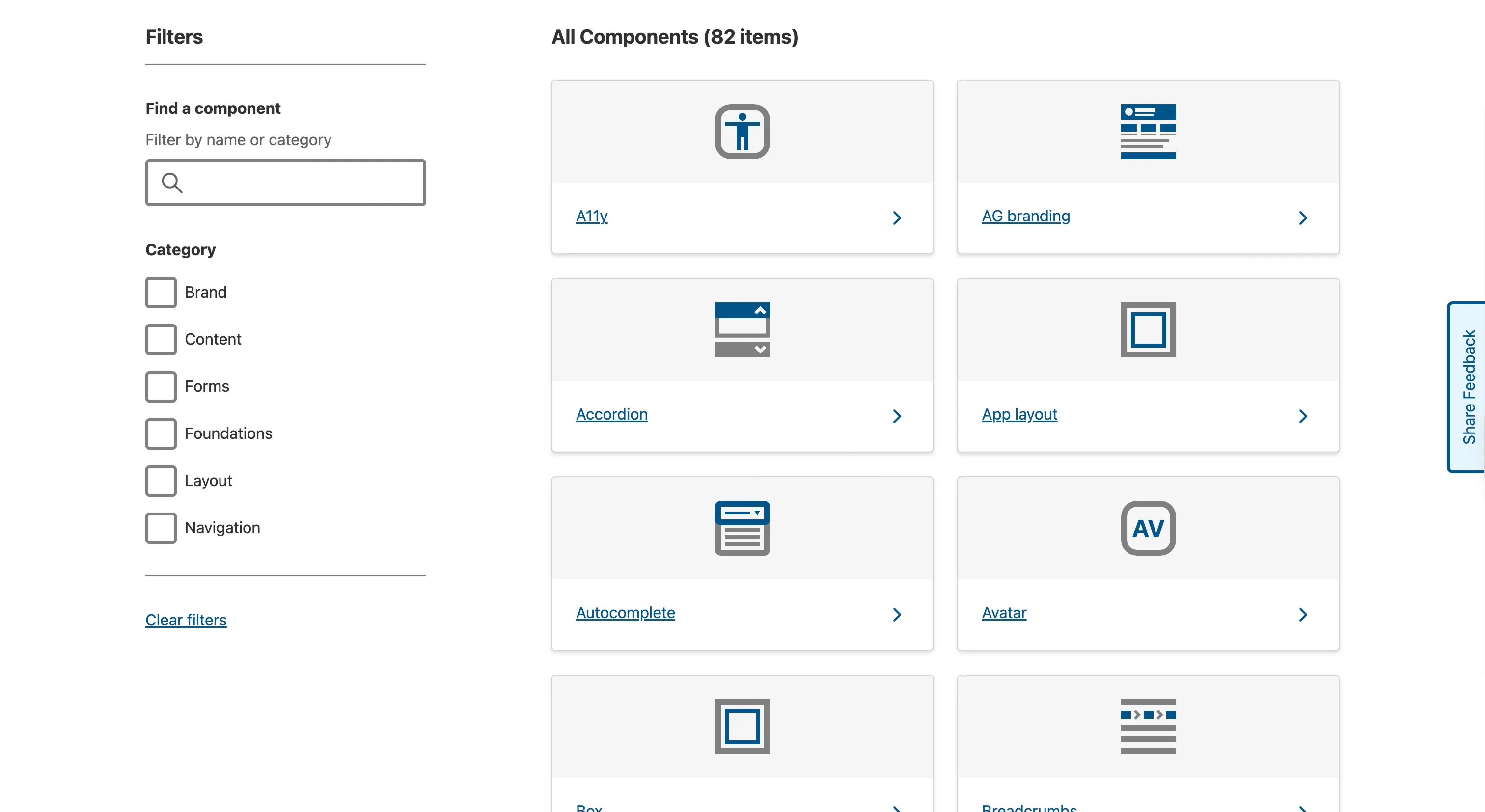
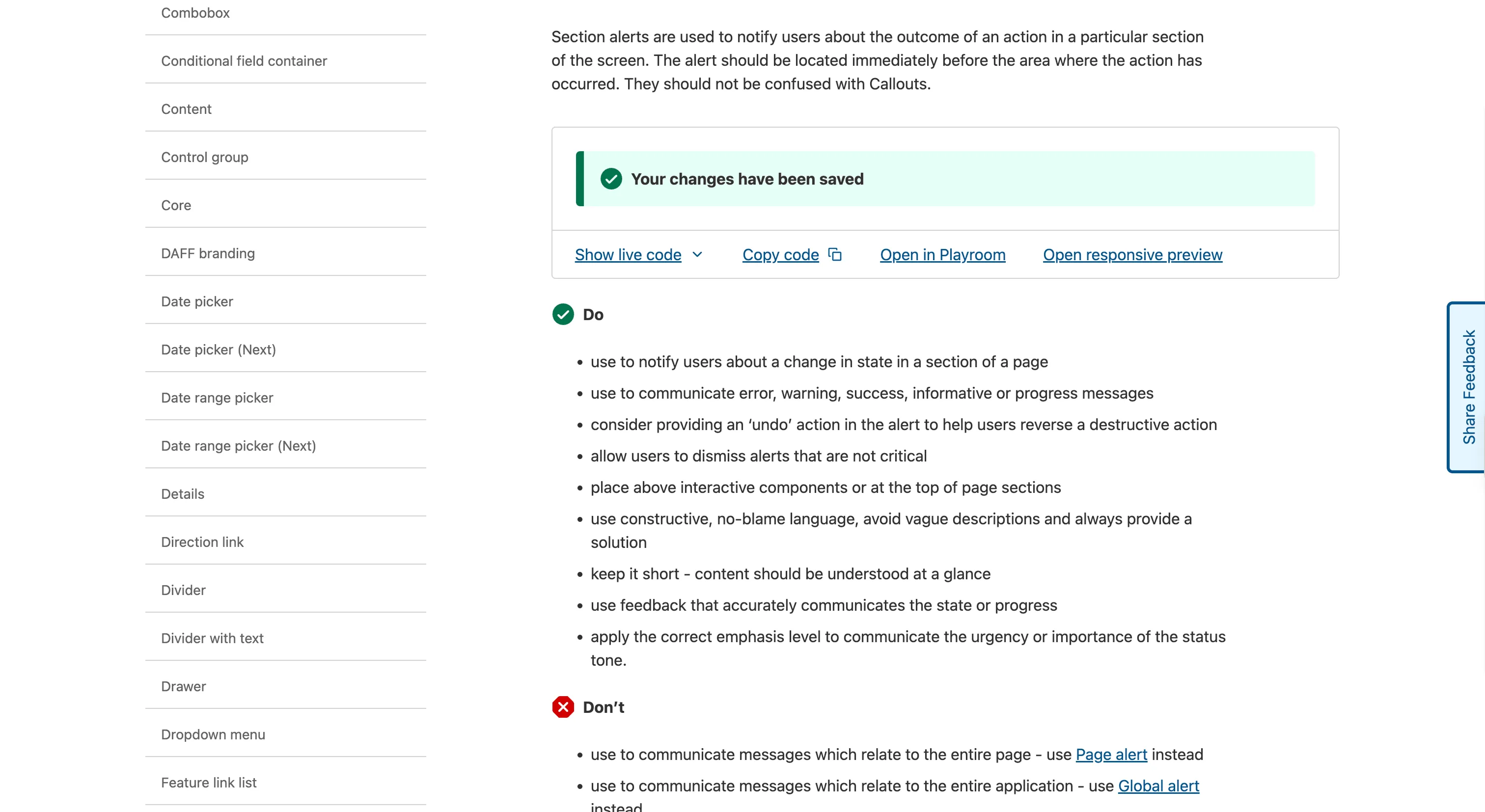
The Agriculture Design System (AgDS), a ground-up React and TypeScript rebuild of Australia's former GOLD design system, built primarily for the department's Export Service. It's open source and notably accessibility-first, independently audited to WCAG 2.1 AA and cited by the auditors as an exemplary accessible React system.
Why we like it
AgDS is one of the few systems whose accessibility claim you can actually check yourself. Its conformance is backed by a published statement from a named third-party auditor, Intopia, dated December 2024, that says exactly who tested it, on what dates, against WCAG 2.1 A and AA, and precisely which components and pages were in scope. That specificity is the whole point: it's a claim someone put their name to.
It's a React and TypeScript library, MIT-licensed, built on the cross-government GOLD system and aligned to Australia's Digital Service Standard, with Storybook and Playroom alongside. The audit even draws the shared-responsibility line in writing, that consumers stay responsible for the accessibility of whatever they build with it, which is exactly the right caveat to keep.
Where it fits
AgDS fits government and public-sector teams on React and TypeScript who must demonstrably meet WCAG 2.1 AA and the Digital Service Standard, and who want an audited, MIT-licensed foundation. The audit covers a sampled subset at a point in time, so read it for what it actually tested.
Ideas to borrow
- 01.
Accessibility practice
Commission and publish a named third-party conformance statement, with the auditor, the dates, the standard and exactly what was tested, rather than an unsourced 'WCAG AA' badge.
- 02.
Governance
Write the shared-responsibility boundary into the accessibility claim itself, so adopters don't read 'the system is accessible' as covering their own implementation.