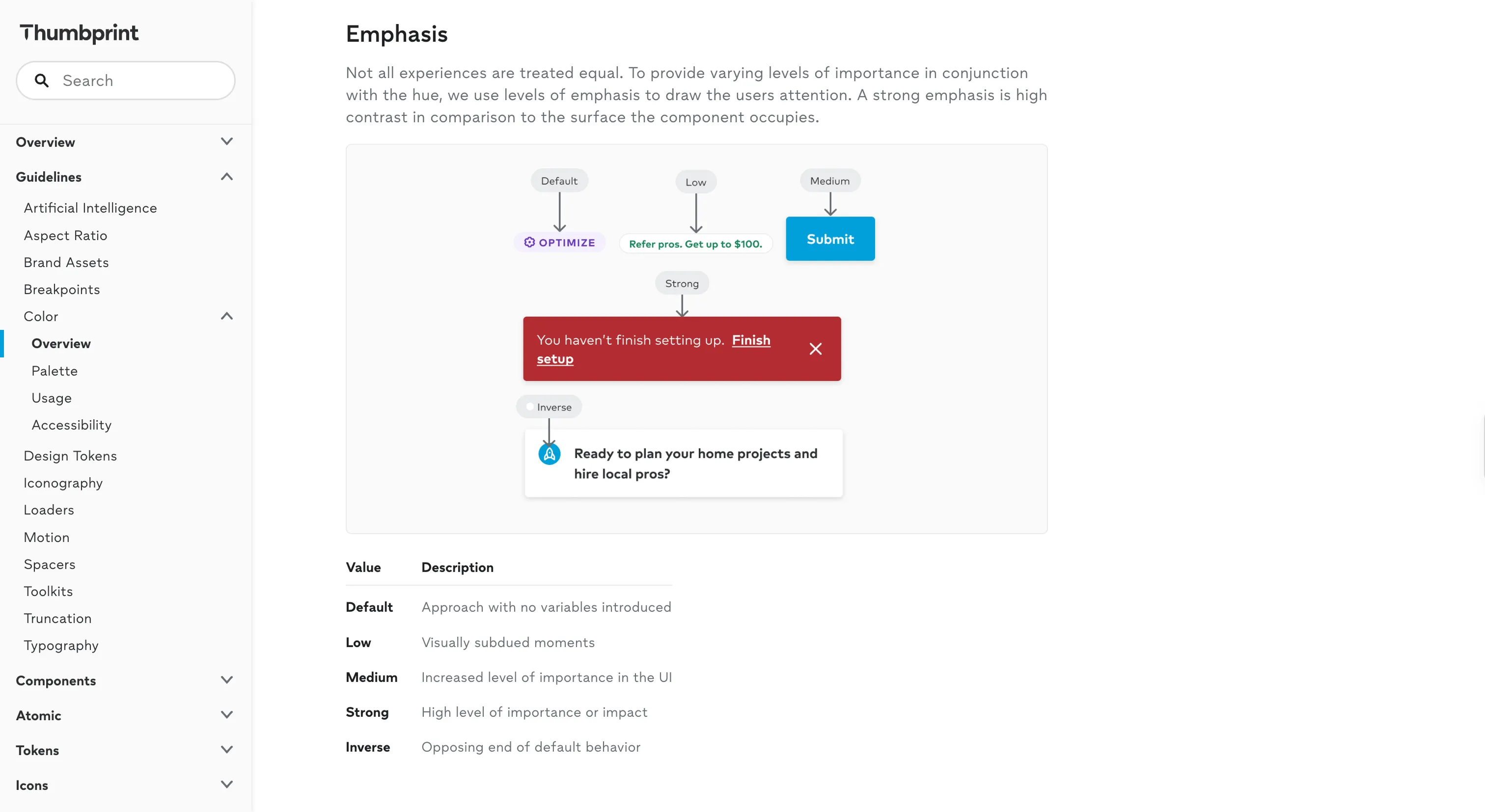
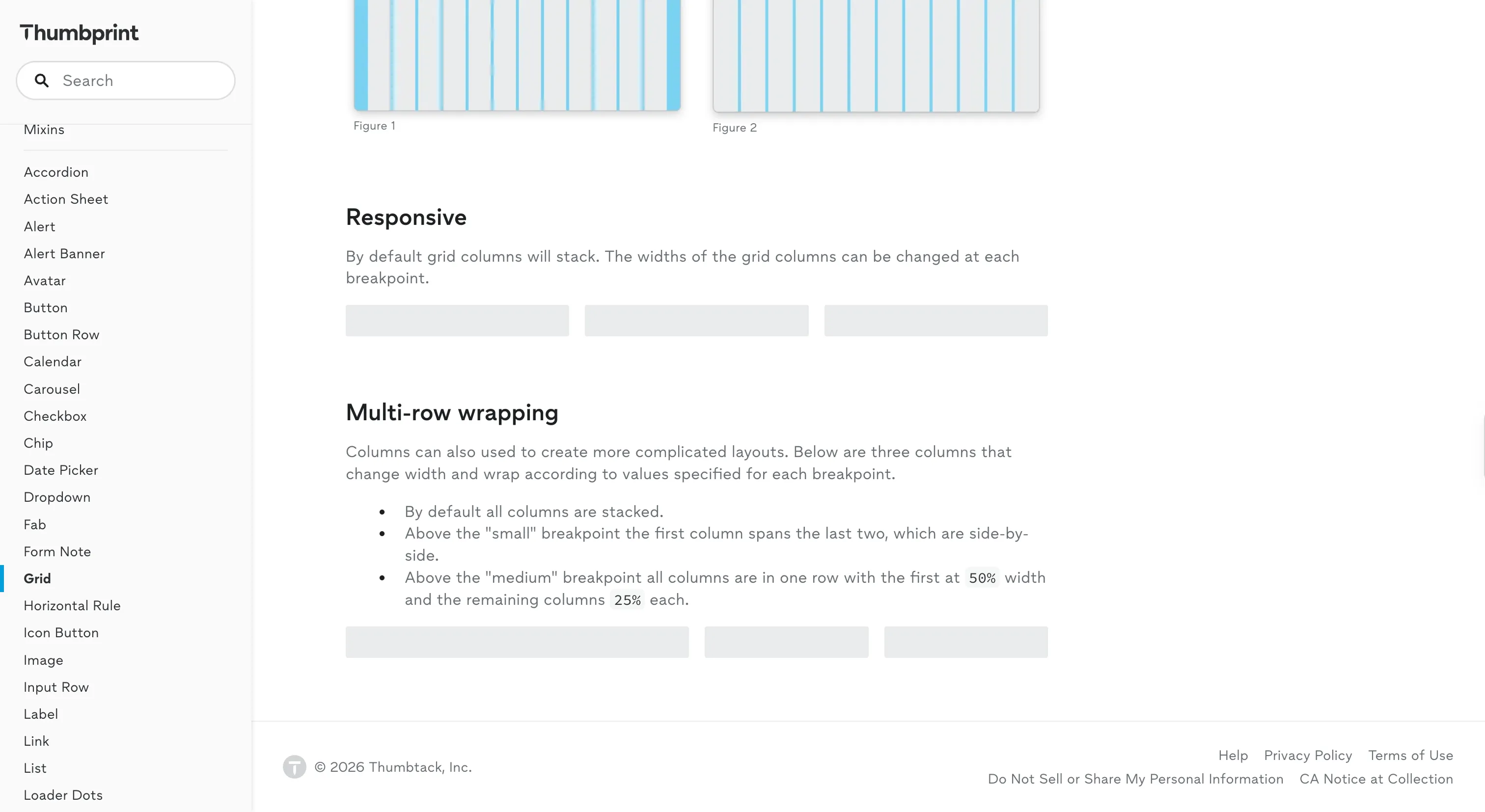
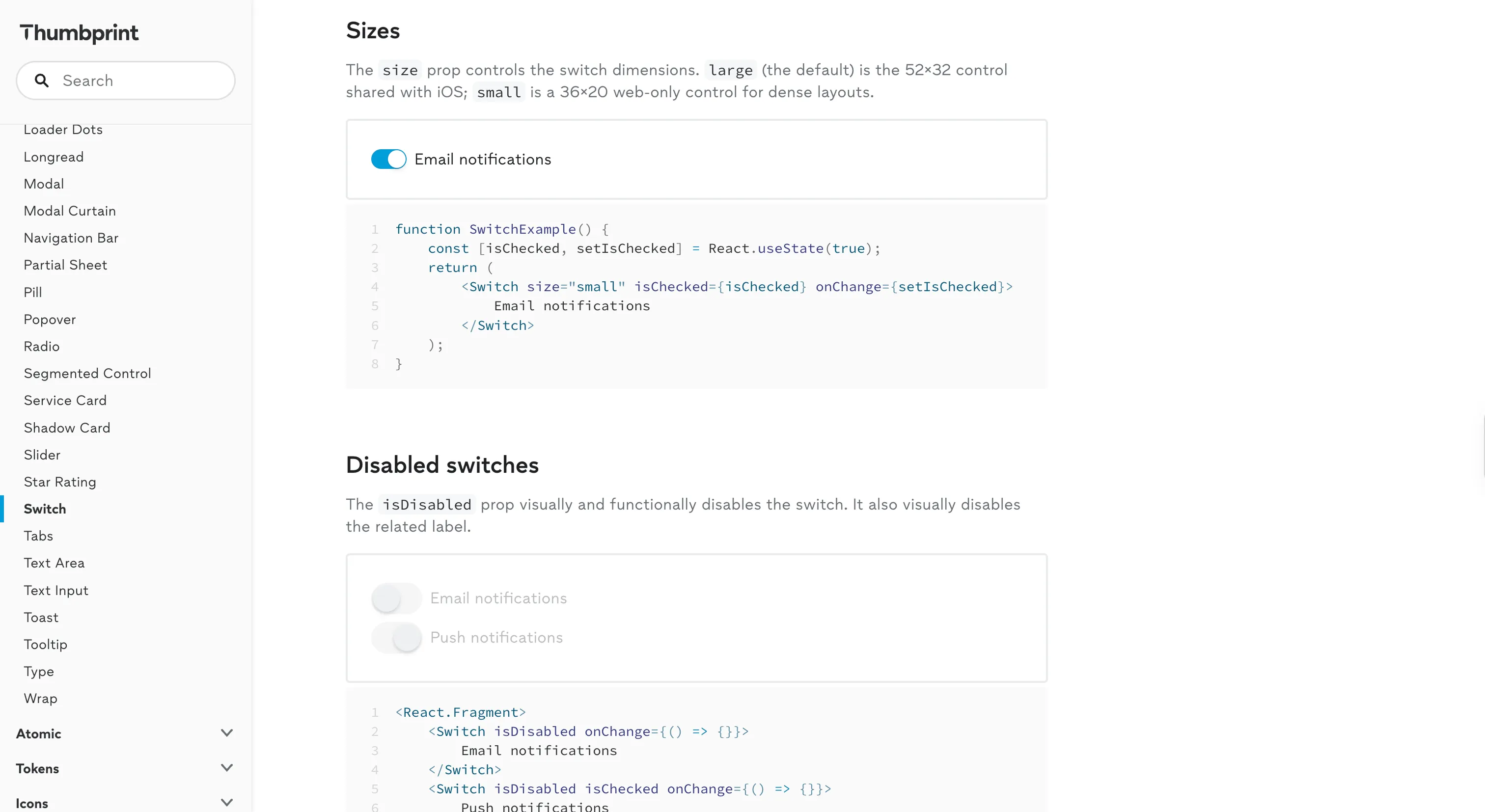
Thumbtack's open-source system, Thumbprint, spanning web, iOS, and Android for its two-sided marketplace.
Why we like it
Thumbprint is a strong public reference for multi-platform token work. Its tokens come from one source and emit to web (SCSS and JS), iOS (Swift) and Android (Kotlin), so all three platforms consume the same design variables, and it even exposes a GraphQL server to query the tokens and their schema rather than hardcode values.
The token model itself is instructive: a two-tier split where semantic tokens describe intent and carry paired light and dark values, referencing raw core tokens, with an explicit rule to reach for a semantic token first and a core token only when no semantic role fits.
Where it fits
Thumbprint fits a company shipping a consumer marketplace across web, iOS and Android that wants true token parity from a single source, and a semantic-first discipline with automatic light and dark.
Good to know its web and iOS repos were archived (2025 and 2024), while the tokens and Android repos appear to still be live, so treat the web and native libraries as frozen references.
Ideas to borrow
- 01.
Token architecture
Generate every platform's token output, SCSS, JS, Swift and Kotlin, from one source, and expose the tokens through a queryable API so tooling reads the schema instead of hardcoding values.
- 02.
Token architecture
Enforce a semantic-first, core-fallback model where semantic tokens encode intent and carry light and dark pairs, with an explicit 'reach for semantic first' rule.