monday.com's open-source React system, Vibe, built around its colorful, approachable, highly-configurable product.
Why we like it
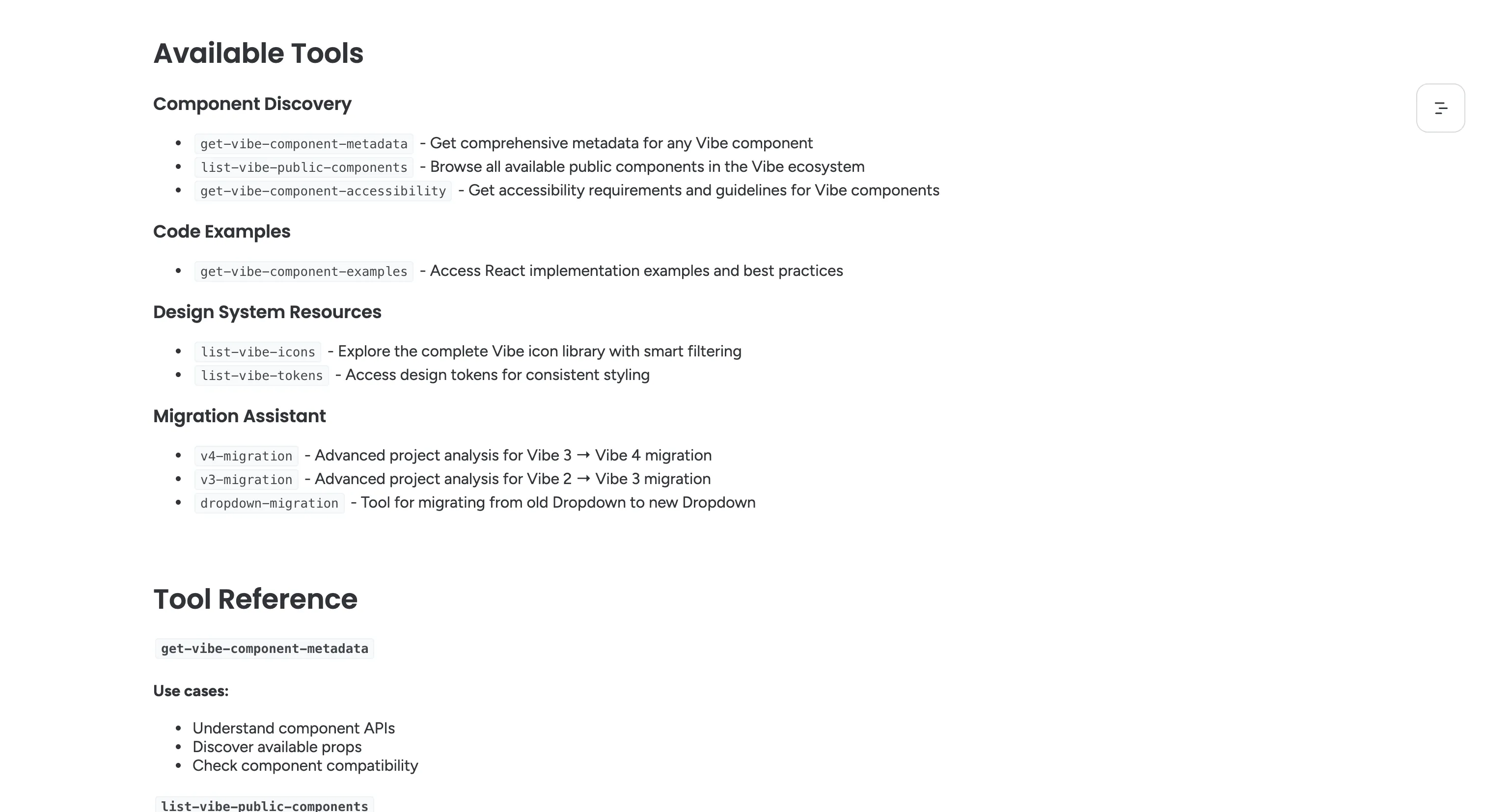
Vibe is colorful and approachable on the surface and seriously tooled underneath, which is the combination we like. It's a fully open (MIT) React library that has put real work into machine consumers: an official MCP server and experimental LLM component metadata, so AI tools can query the actual component APIs, examples and icons instead of guessing.
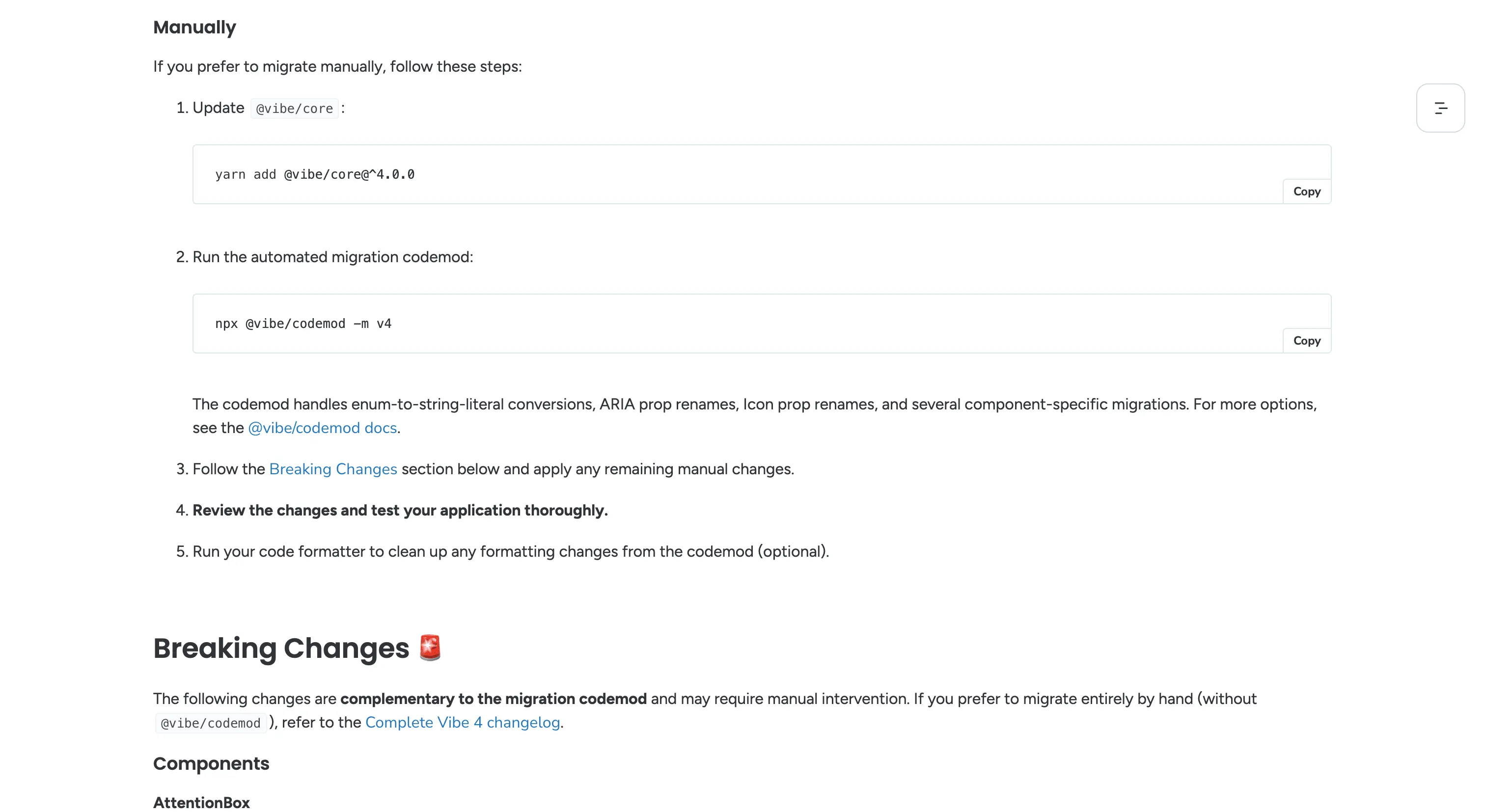
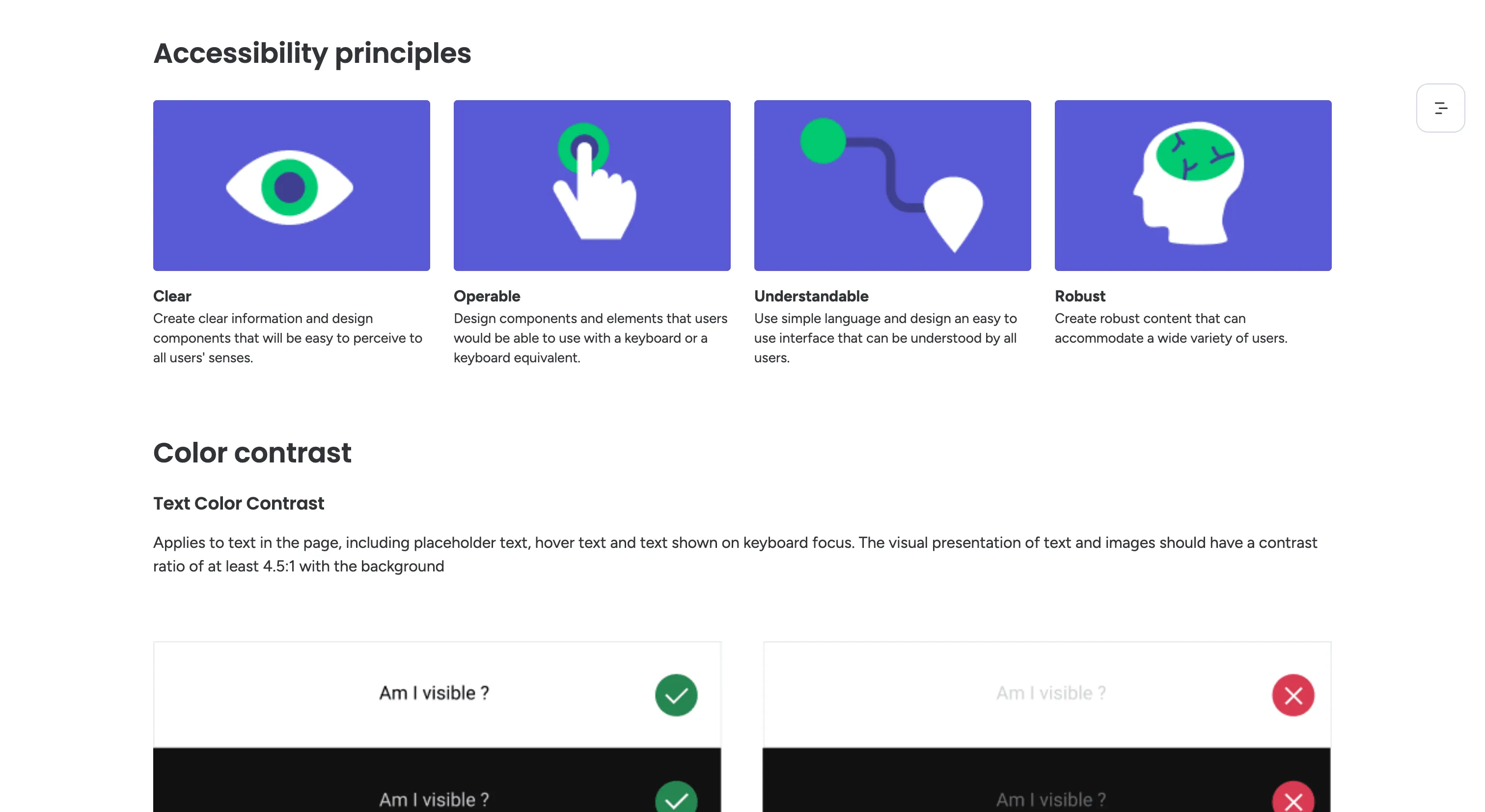
It's built as a proper scoped-package ecosystem, core, icons, a Playwright testkit, a codemod CLI and styles, rather than one bundle, so teams pull only what they need and get an automated path through breaking changes. Its fifty-plus components even include a dedicated accessibility category in the docs.
Where it fits
Vibe fits React product teams, the monday.com ecosystem and its app builders, who want a properly open, TypeScript-first library with first-class AI and migration tooling. The MCP server, SSR and LLM-metadata features are recent and experimental, and the older Vibe 2 line is no longer maintained, so build on the current major.
Ideas to borrow
- 01.
AI-readiness
Ship a first-party MCP server plus LLM component metadata, so AI tools query your real component APIs, examples and icons instead of guessing.
- 02.
Process/automation
Publish version-migration codemods as a CLI, so consumers auto-apply breaking-change migrations rather than doing them by hand.