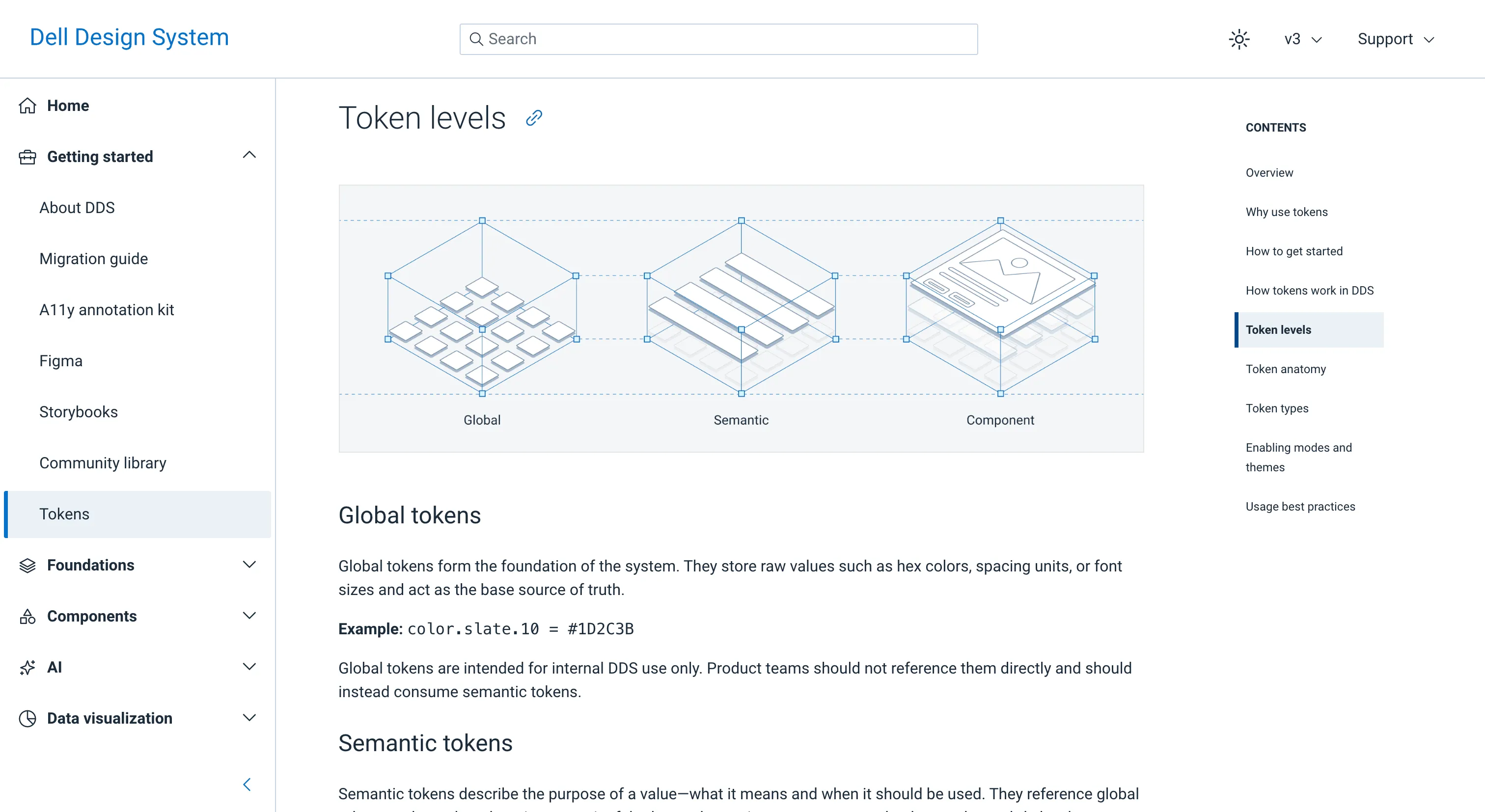
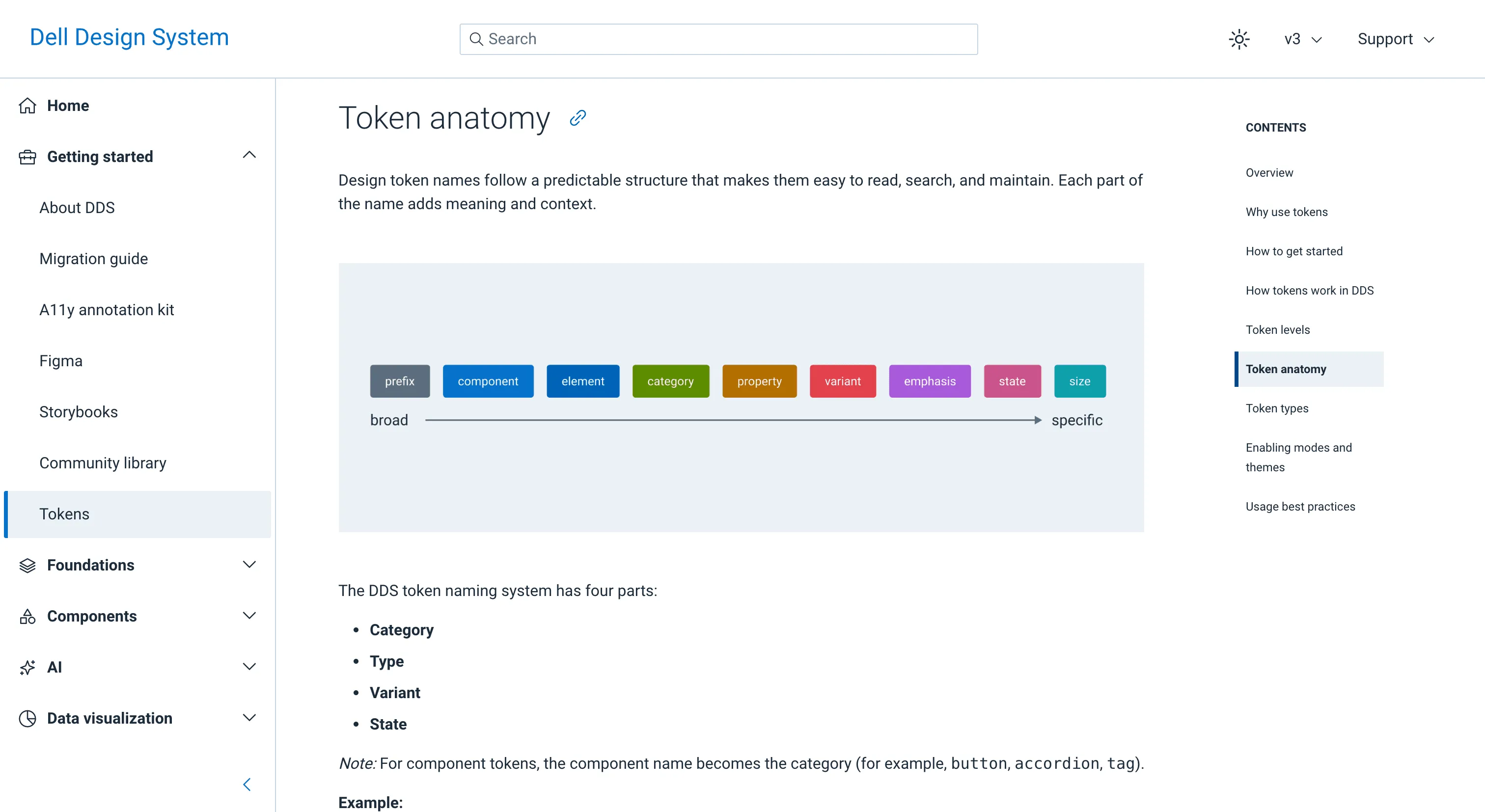
Dell's internal system, now on its third major version, built token-first and pitched as AI-compatible so both humans and agents can read the primitives the same way.
Why we like it
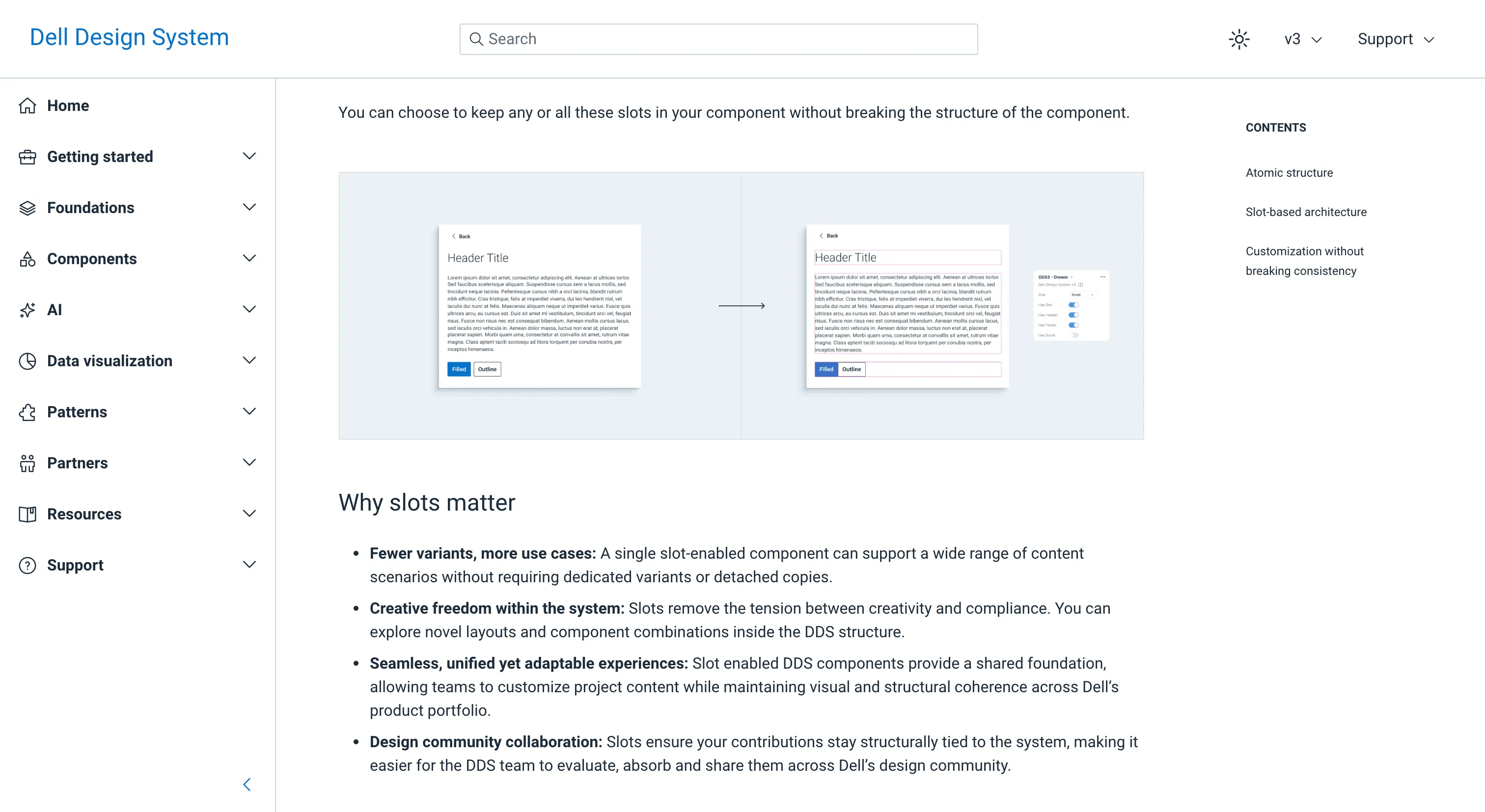
DDS v3's distinctive choice is what it put at the center: tokens and slots, not components. The Figma libraries are built on both, so a designer composes a page from slot-based structures rather than ever having to detach a component to make it fit. It's a quiet way of designing flexibility in before anyone needs it, and it's the sort of thing a team only lands on after a few years of components fighting each product's edge cases.
The system is also published openly even though it isn't open source. The docs site, the Vanilla Storybook and the contribution model are all public, which is unusual for an enterprise system of this size and makes it a useful one to read even if you'll never ship on it.
Where it fits
DDS is best read as a reference for token-first architecture and slot-driven Figma libraries, rather than something to adopt directly. There's no public GitHub repo and the code libraries are internal, so what's on offer to outside teams is the thinking and the Figma patterns.
Good to know: the "AI-compatible" framing is new and worth watching, but it mostly describes the structure of the tokens and the predictability of the component APIs rather than a shipping MCP server or agent integration.
Ideas to borrow
- 01.
Figma architecture
Build your Figma libraries on tokens and slots so designers compose from flexible structures, instead of detaching components when the defaults don't fit a specific product.
- 02.
Governance
Publish your docs, Storybook and contribution model openly, even when the system itself isn't open source, so partner teams and the wider community can learn from the work without taking on the code.