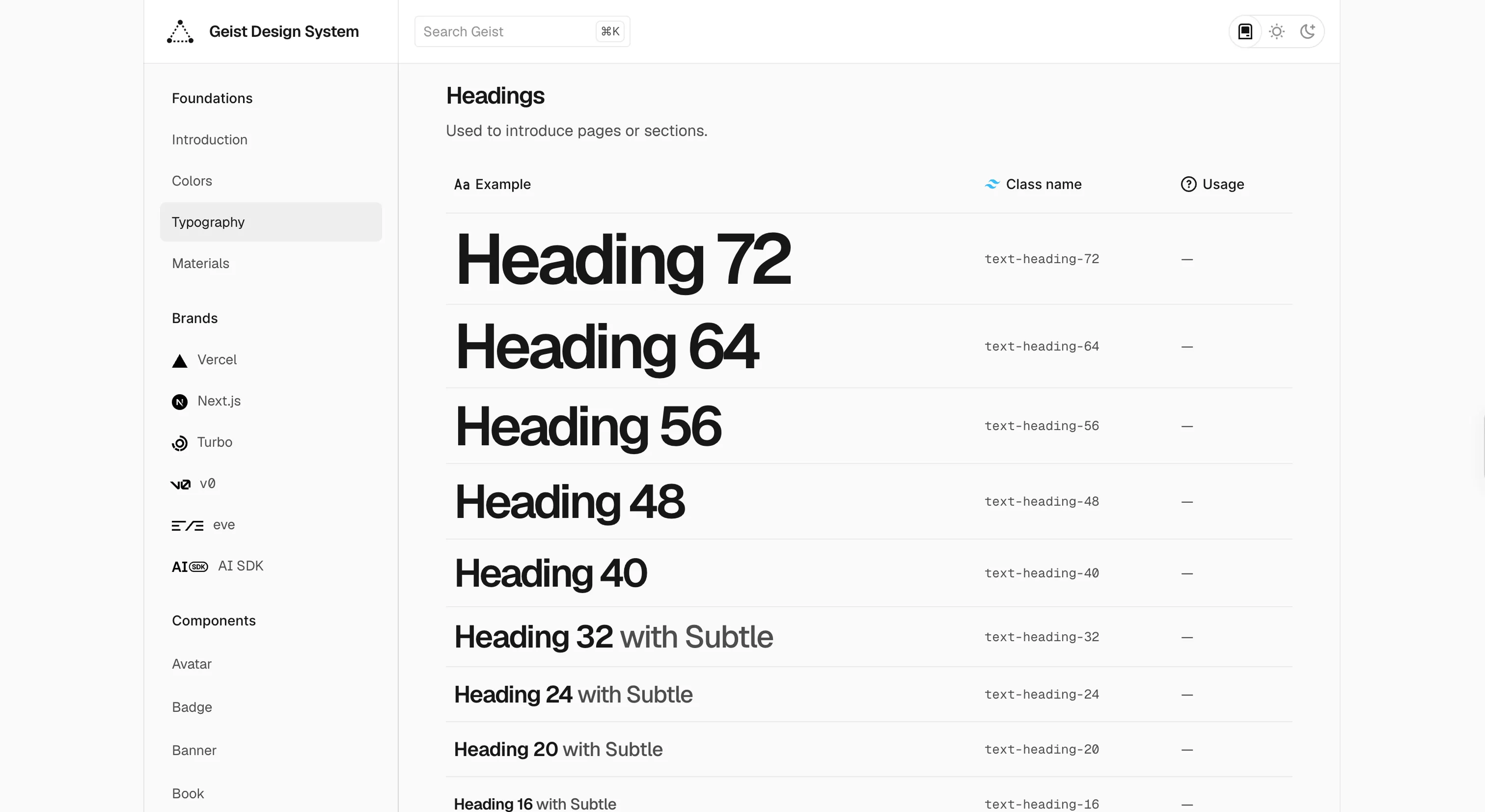
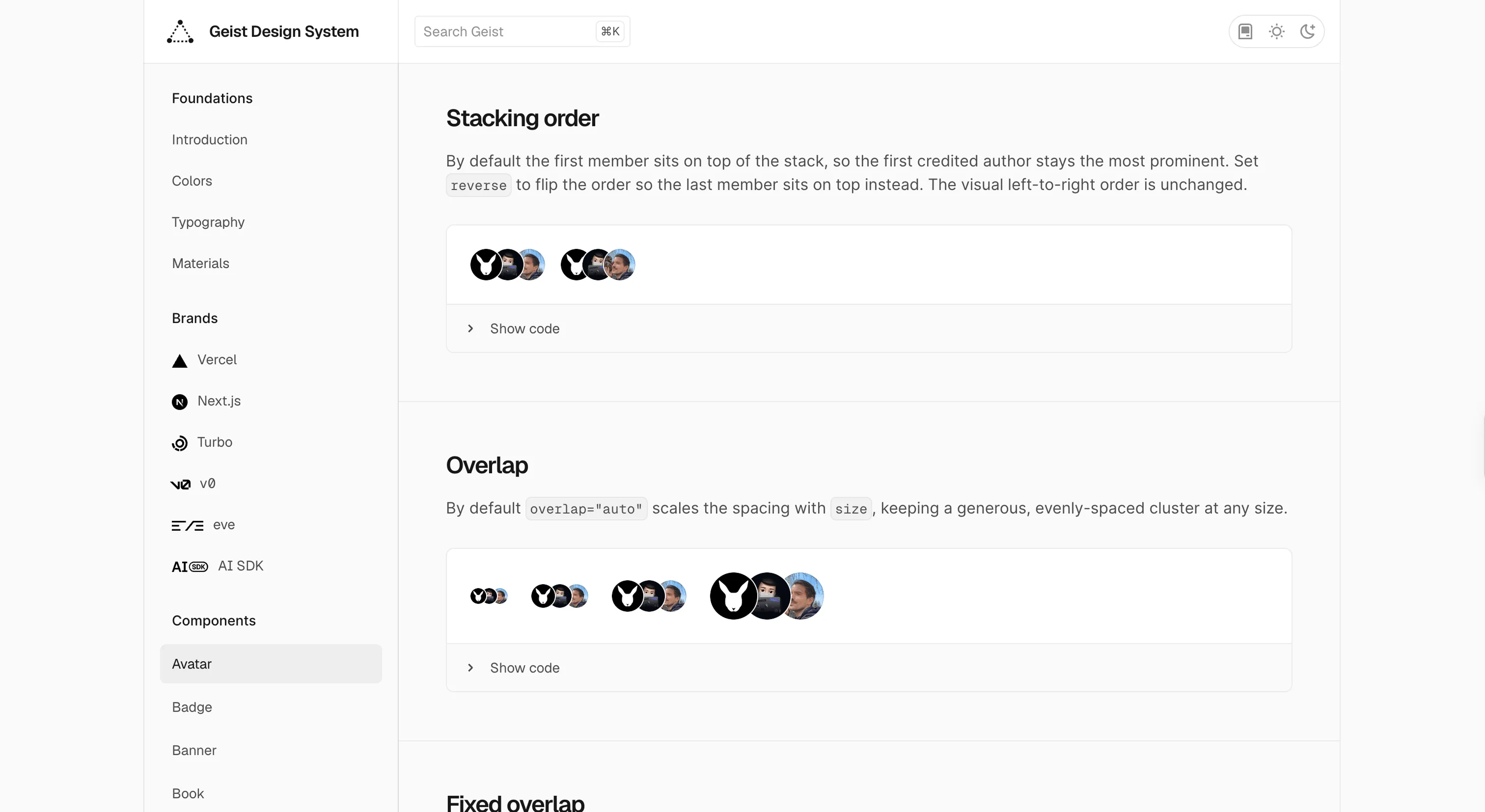
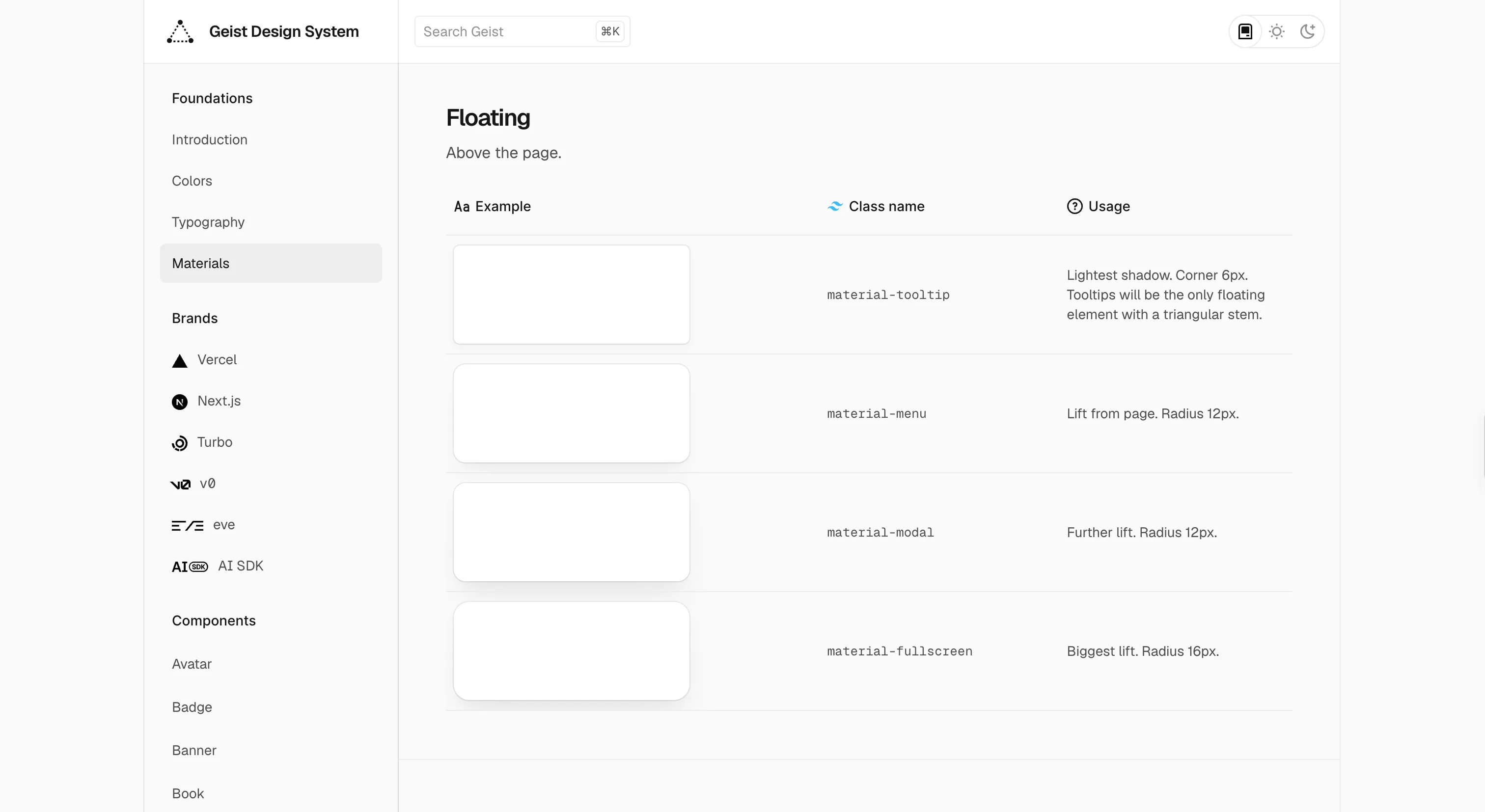
Vercel's system, Geist, built for high-contrast, developer-facing interfaces, with its own Geist Sans and Geist Mono typefaces and React components, and docs published as Markdown for AI agents.
Why we like it
Geist does one AI-readiness thing so simply it's easy to walk past: every docs page is available as clean Markdown. Append .md to any URL, or send an Accept: text/markdown header, and an agent gets a parseable page instead of scraping rendered HTML. It costs almost nothing and helps a lot.
On the design side it ships its own variable typefaces, Geist Sans and Geist Mono (and a newer Pixel), under the SIL Open Font License, so any team can adopt the exact type with no licensing barrier. The React components come shadcn-style.
Where it fits
Geist fits React and Next.js teams building developer tools, dashboards and technical products who want a clean, type-forward system, and it's naturally suited to AI-assisted workflows given the Markdown docs.
Ideas to borrow
- 01.
AI-readiness
Make every docs page retrievable as raw Markdown, by a .md suffix or content negotiation, so agents read parseable docs instead of scraping HTML.
- 02.
Contribution
Release your brand typefaces as variable fonts under an open license, so any team, or model-generated UI, can use the real brand type freely.