Design system for Cloudflare with design tokens, UI components, and a component library
Why we like it
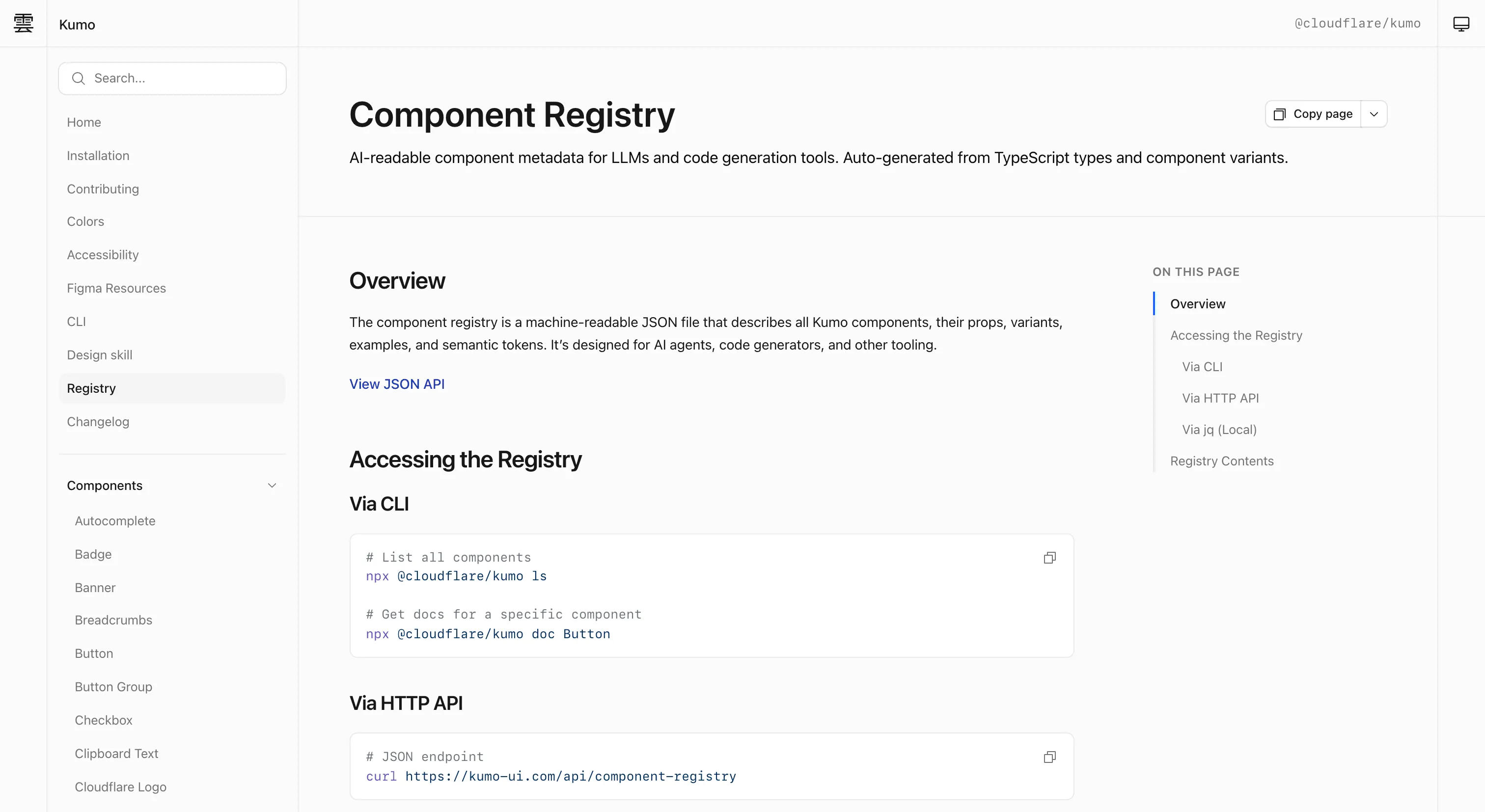
Kumo is a pragmatic, modern take, and two choices stand out. Rather than re-implementing behavior, it builds on Base UI primitives and re-exports them, so keyboard navigation, focus management and ARIA come from a tested foundation. And it treats coding agents as first-class: a CLI serves component docs on demand, and an AGENTS.md encodes the token rules and hard 'never do' constraints an agent should follow.
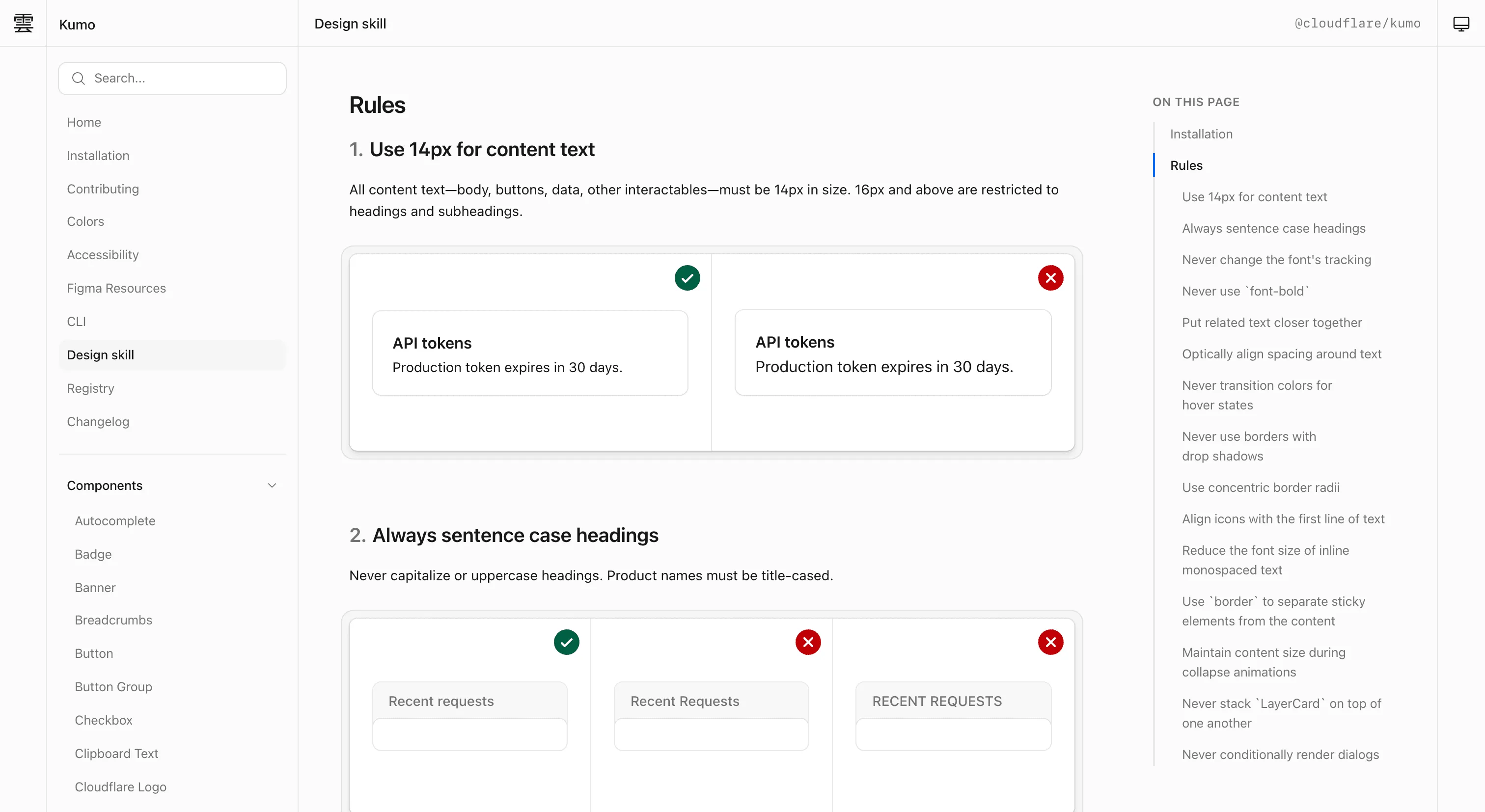
It's a modern toolchain, Vite, Tailwind and TypeScript, with granular imports, aimed at Cloudflare-style dashboards and apps, plus a Figma plugin for the design-to-code direction.
Where it fits
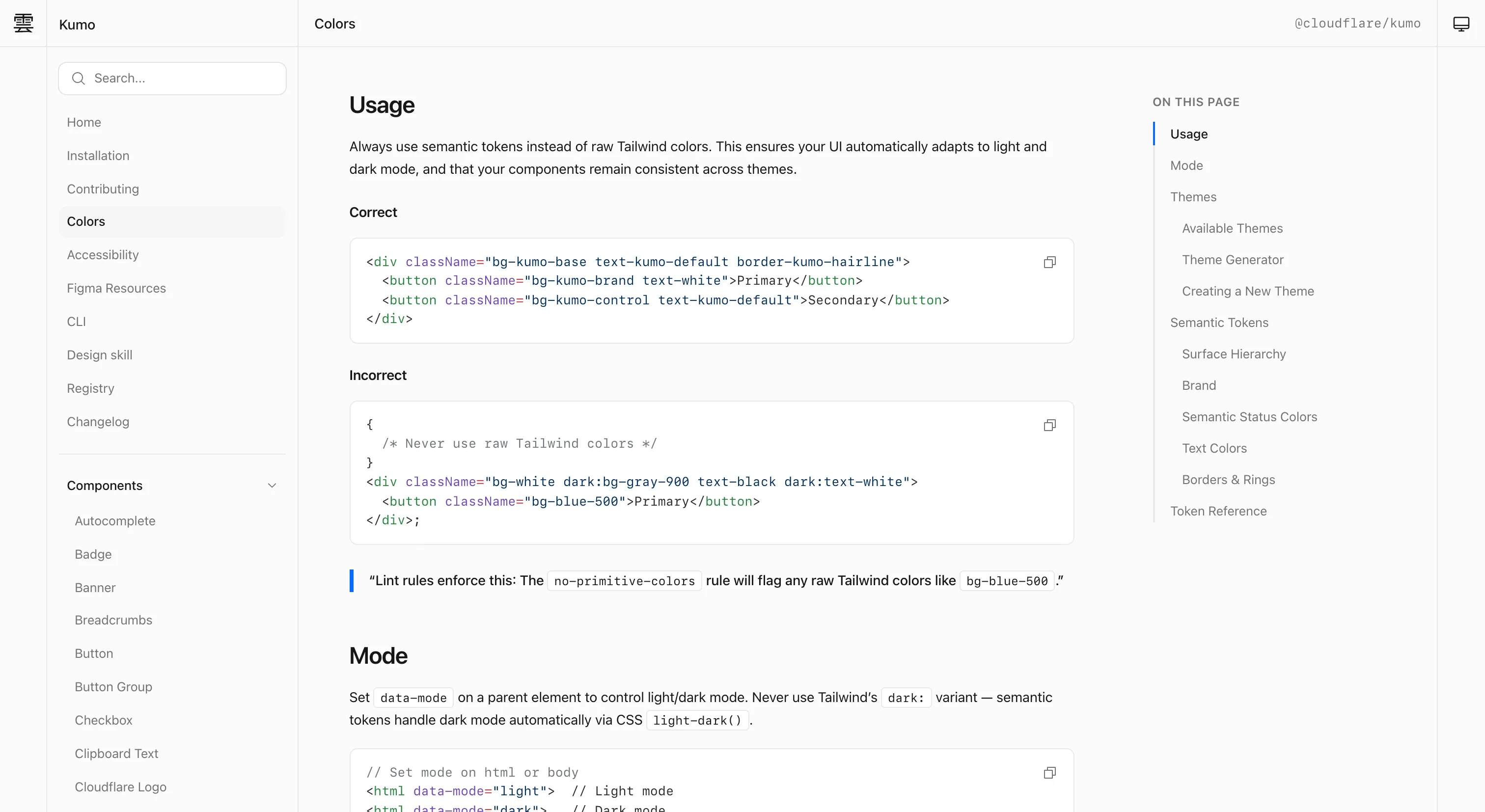
Kumo fits React and Tailwind teams who want accessible primitives plus real agent tooling from the start. Its token architecture is now documented properly too: semantic tokens named by role rather than hue, a surface hierarchy from canvas to contrast, data-mode for light and dark through CSS light-dark(), and data-theme for themes like FedRAMP, all generated from one config.
It's still young, created in late 2025, so we'd watch how it settles before building a large product on it.
Ideas to borrow
- 01.
AI-readiness
Ship an AGENTS.md that encodes your token rules and hard 'never do' constraints for coding agents, paired with a CLI that serves component docs on demand.
- 02.
Architecture
Layer your visual style on an accessible primitive library (here, Base UI), so accessibility is inherited rather than rebuilt.