Ant Group's open-source React system for enterprise back-office software. Dense forms and tables are its home ground, and teams retheme it through design tokens without forking.
Why we like it
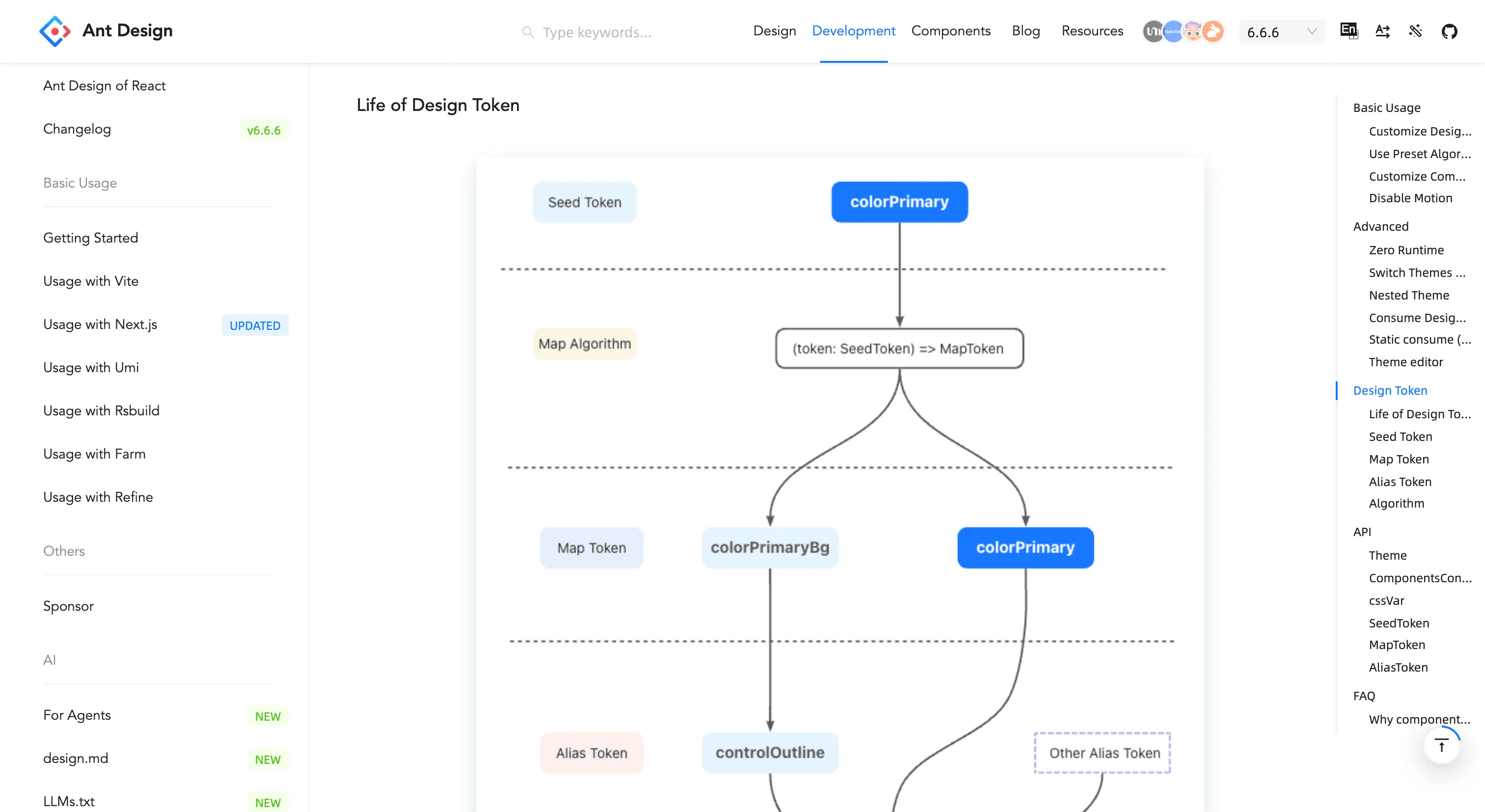
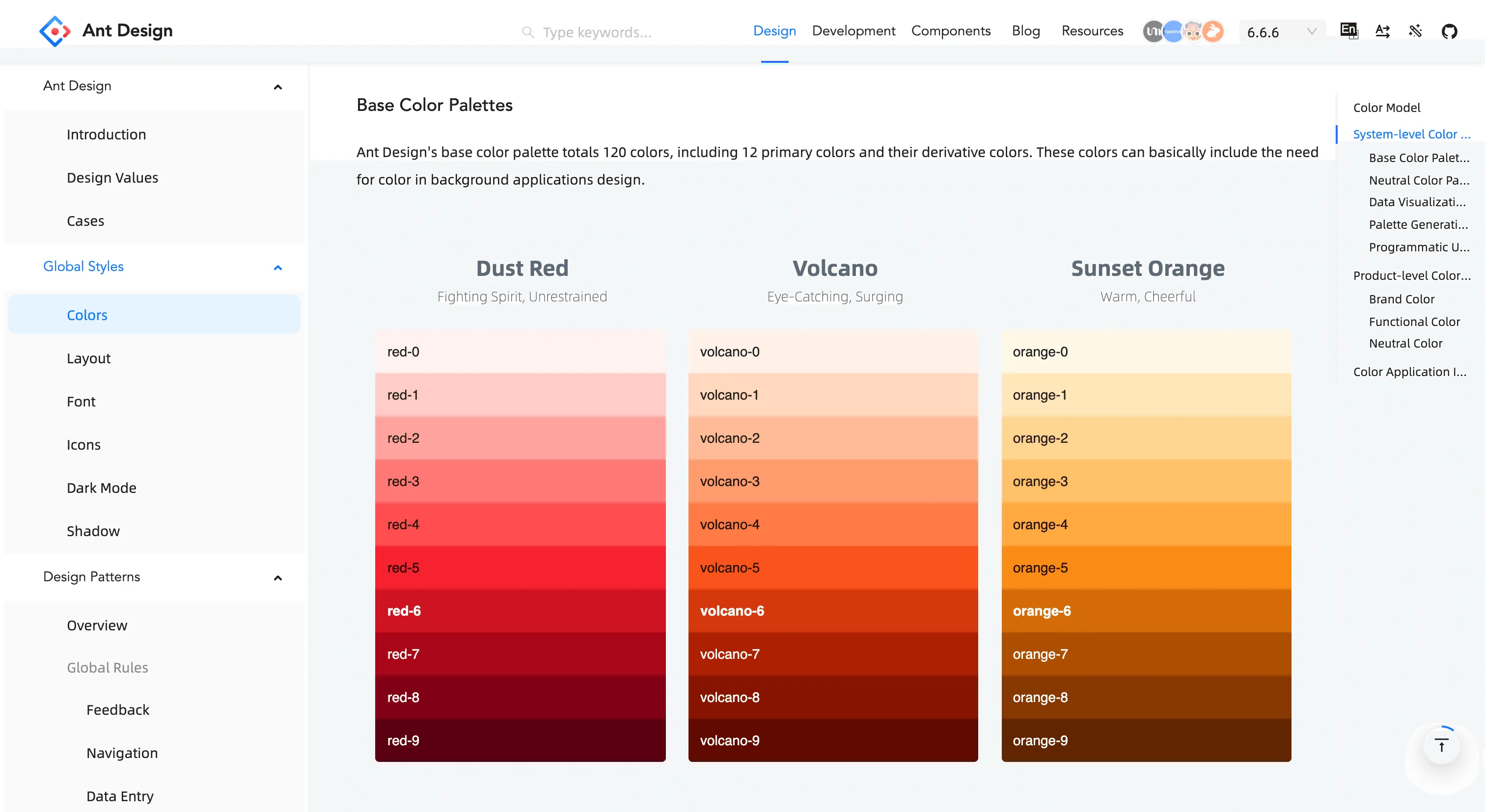
Ant Design's theming is a lesson in deriving values instead of hand-writing them. A handful of seed tokens, like the primary color and border radius, run through algorithm functions to produce the full set of map tokens, and alias tokens point at those. Dark and compact modes are just more algorithms, and they stack, so a team can pass both at once and get a dense dark theme without writing a single extra value. Even the color palette is generated: twelve named hues, each with a mood (Dust Red is "Fighting Spirit, Unrestrained"), expanded into ramps by an HSB-based algorithm.
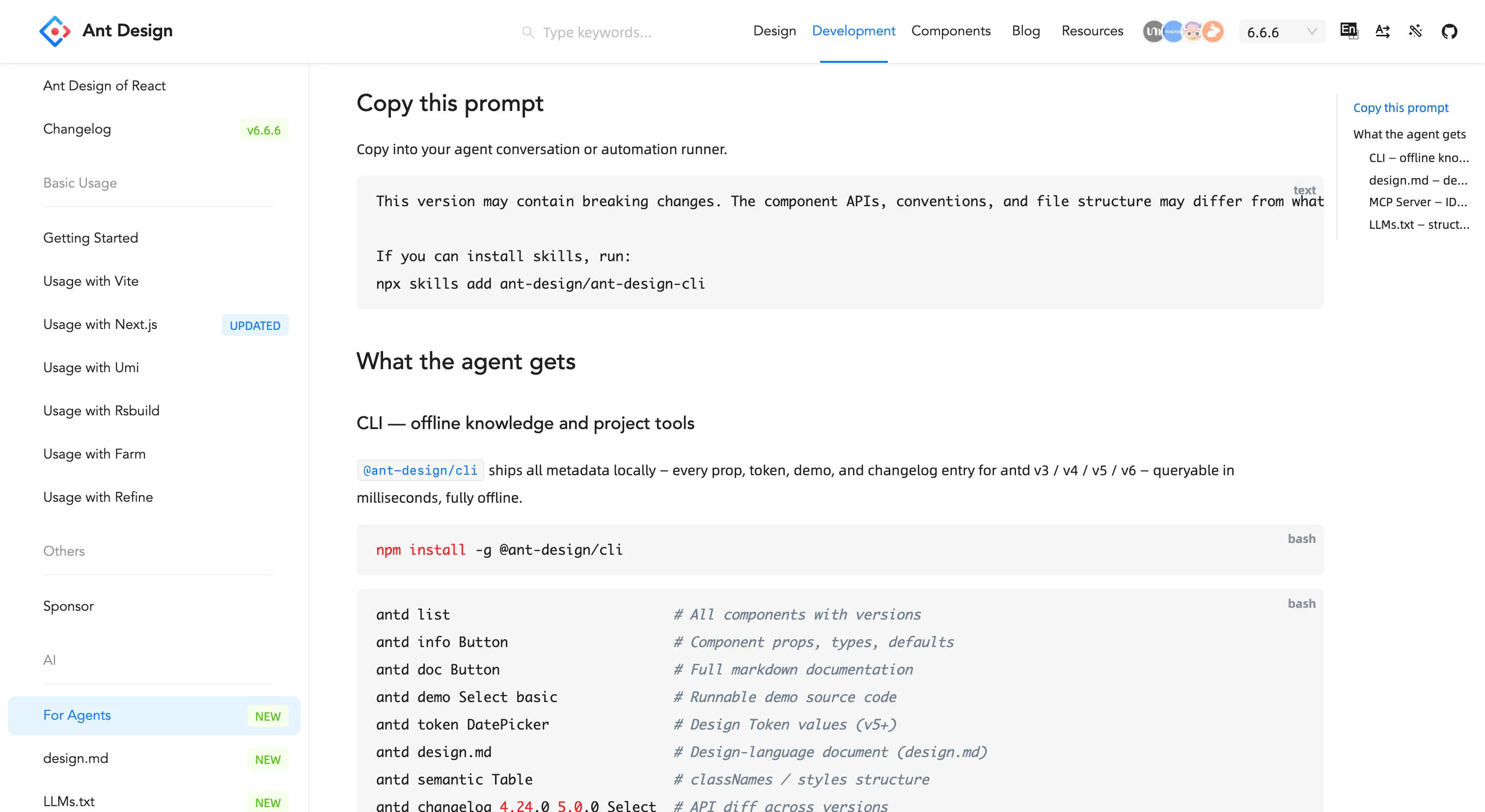
It's also one of the furthest along on AI-readiness. The docs have a For Agents section with a design.md file, llms.txt, an MCP server and a CLI that works offline across versions 3 to 6, including a lint command that finds deprecated APIs. The repo carries its own agent skills for changelogs, pull requests and releases, and the team has written up how they use them to keep maintenance costs down.
Where it fits
Ant Design fits data-dense enterprise, admin and back-office web apps, the tables, forms and dashboards most internal software is made of, for teams of any size that want a complete React kit with brand theming built in. Ant Design Pro and AntV cover page templates and charts, and Ant Design X covers AI and chat interfaces.
It needs React 18 or later, and v6 changed the internal DOM structure, so CSS that targets component internals needs checking on upgrade. Old APIs keep working with console warnings until v7, which makes the move gentler than most majors. Design tooling hasn't kept pace with the code: the official kit is a v5-era Sketch file, every Figma kit is third-party, and accessibility improves fix by fix more than against a documented standard.
Ideas to borrow
- 01.
Token architecture
Derive tokens with functions instead of hand-writing every value. A few seeds run through composable algorithms like dark and compact, so a whole theme can be switched or combined by passing an array.
- 02.
AI-readiness
Ship a design.md and llms.txt alongside the docs, plus a CLI and MCP server that work offline across versions, and give agents a ready-made prompt that warns their training data may be out of date.
- 03.
Process/automation
Deprecate first and break later. Renamed APIs keep working with console warnings for a full major version, and a CLI lint command finds deprecated usage before the next major removes it.